 |
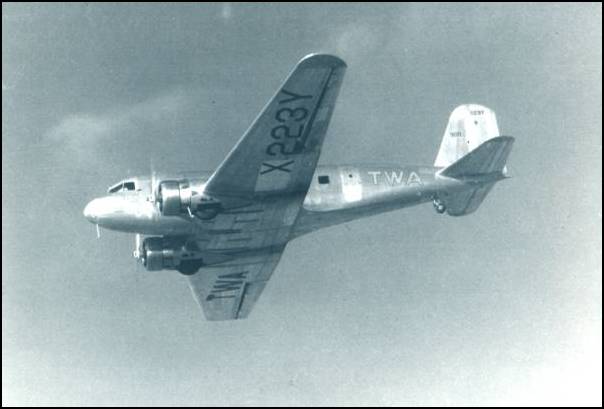
| The only known photo of the original flite of the DC-1 |
|
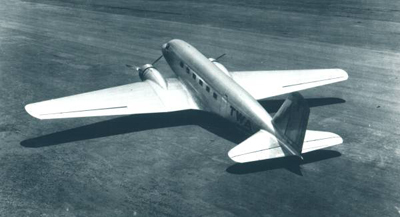
On July 1, 1933, at exactly 12:36 PM, 332 days after Douglas received Jack Frye's letter, the main gear of the DC 1 left the ground. It was the beginning of the end for the Condors and other wood, fabric and wire airplanes. Douglas looked at Raymond. "Well she's off," he said calmly.
SERIOUS TROUBLE
"The plane was not more than a hundred feet off the ground when the left engine sputtered, and quit. Alarm registered in Clover's brain. A moment later, the right engine did the same. The crowd below was watching intently and saw it happen too. Most were silent, just staring up at the drama unfolding before them.
Douglas overheard someone say, "She's going to crash." His stomach knotted. The crowd expected a disaster..."
SINGLE ENGINE TEST
September 12 was the day of the all important single engine test. The engine run up was normal, and Allen taxied the airplane onto the runway at Winslow, Arizona, carrying water ballast for a full 18,000 pounds of gross weight. The contract had stipulated a test flight from, " Los Angeles, eastward . . . , or Winslow, westward . . ."
As the plane started down the runway, Tomlinson called the airspeed, and runway markers. The plane bounced lightly as it began to un stick from the runway surface.
"Gear up!" Allen suddenly called.
The idea was to get the gear up as quickly as possible to reduce the drag on the plane. When Tomlinson began pumping the gear handle, Allen reached over and shut down the right engine.
The plane sagged and struggled to maintain flight...
THE TWA TEST - FOR REAL
On November 15, 1933, Donald Douglas had his first ride aboard the DC 1. Clover and Tomlinson were flying Douglas from Santa Monica, to Newark, New Jersey, to meet with TWA's president to renegotiate the DC 1 contract...
As the airplane climbed over the Andais Pass, one of the highest points along the Continental Divide, one engine failed. Douglas later said, "Here was the TWA requirement, for real, but you could hardly tell back in the cabin. It was like nothing happened."
|